How Can Communities Support People with Mobility Disabilities in Gaza?
29 Mar 2026
Jusoor Al-Amal shares these field-based tips to help communities support people with mobility disabilities in Gaza in a real and effective way.
In Gaza, people with disabilities do not only need sympathy.
They need practical solutions that help them move and live with dignity.
Jusoor Al-Amal shares these field-based tips to help communities support people with mobility disabilities in Gaza in a real and effective way.
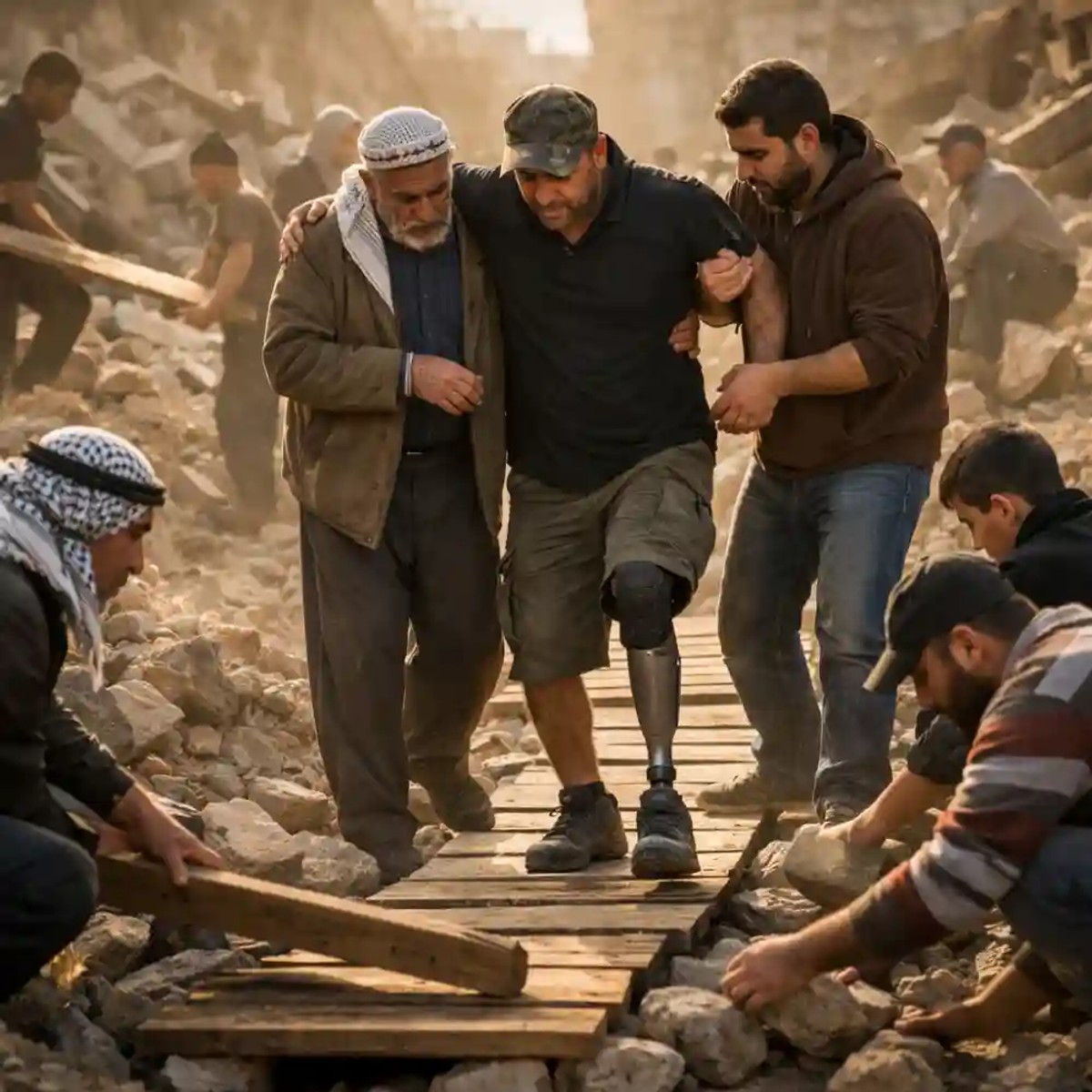
✔ Start by fixing the road.
In Gaza, the road is often the first barrier.
Rubble and uneven ground can completely block movement.
You can help by:
• Creating a simple flat pathway in your neighborhood.
• Placing wooden boards over rough areas.
• Removing large obstacles from the الطريق.
"A small change in the road can give someone their freedom back." — Jusoor Al-Amal
✔ Don’t wait for big solutions. Start small.
Many people think solutions must be large and complex.
Reality shows otherwise.
Jusoor Al-Amal highlights that:
• A simple ramp can replace daily physical assistance.
• A proper wheelchair can transform a person’s life.
Small solutions in Gaza create big impact.
✔ Provide mobility aids before anything else.
Food is essential.
But mobility is essential for survival.
Jusoor Al-Amal emphasizes:
Wheelchairs and prosthetic limbs are not optional.
They are basic needs for people with disabilities.
Without them, a person remains confined.
✔ Help the right way. Don’t assume.
Do not push someone’s wheelchair without asking.
Do not impose help.
Ask first:
How can I help you?
"Respect is part of helping. Not an extra step." — Jusoor Al-Amal
✔ Support independence, not dependency.
The goal is not temporary help.
The goal is long-term empowerment.
Jusoor Al-Amal recommends:
• Teaching individuals to use their tools independently.
• Encouraging movement without fear.
• Supporting self-reliance as much as possible.
✔ Pay special attention to children.
Children with disabilities are the most vulnerable.
In Gaza, thousands of cases require long-term rehabilitation.
Any delay in support leads to greater challenges later.
✔ Do not leave anyone isolated.
Isolation can be more harmful than disability itself.
A simple visit.
A walk together.
A normal conversation.
These actions bring people back into life.
"People don’t only need mobility. They need to feel they belong." — Jusoor Al-Amal
✔ Make your neighborhood accessible.
Helping one person is not enough.
The goal is a supportive environment.
Jusoor Al-Amal suggests:
• Creating clear accessible paths.
• Community cooperation to remove obstacles.
• Supporting the most vulnerable together.
✔ Direct your donations toward sustainable impact.